Spray Drying with Inert-Gas Circulation and Solvent Recovery
The BLPG closed-loop spray dryer converts suitable solvent-based solutions, emulsions, suspensions and pumpable pastes into powder. It combines rotary atomization with an enclosed drying-gas circuit, powder collection and solvent condensation.
The process is intended for applications where the solvent needs to be recovered or the material benefits from reduced oxygen exposure. Recovered solvent can be reused after the required downstream treatment, depending on solvent purity and process requirements.
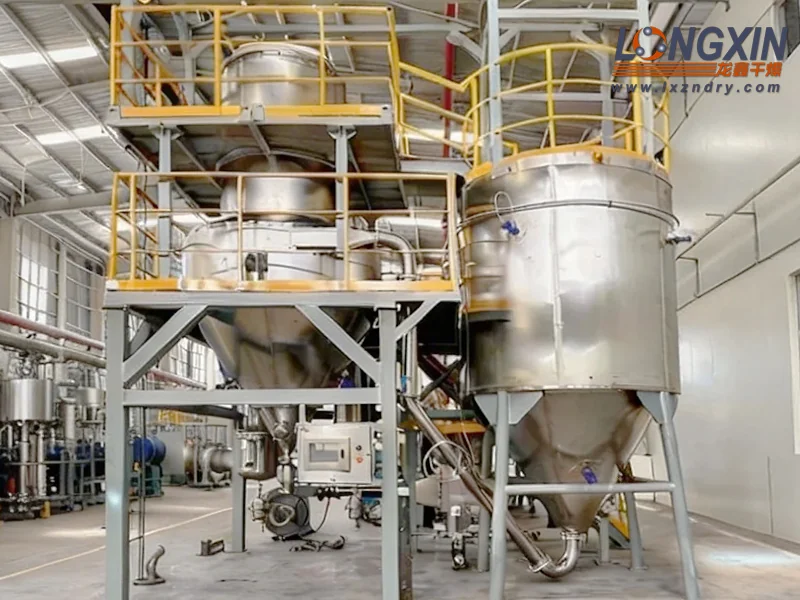
How the Closed-Loop Process Works
- Inert-gas heating: nitrogen or another specified inert gas is heated and supplied to the drying chamber.
- Feed atomization: a feed pump delivers the liquid to a rotary atomizer, which disperses it into fine droplets.
- Rapid drying: the droplets contact the heated inert gas. Solvent evaporates and dry particles form for discharge and collection.
- Powder separation: a cyclone and bag filter separate entrained powder from the gas stream. Nitrogen pulse cleaning is used for the specified filter arrangement.
- Solvent condensation: the gas passes through a condenser to recover solvent as a liquid. A downstream gas–liquid separator limits liquid carryover.
- Gas recirculation: the conditioned gas is reheated and returned to the chamber. Pressure monitoring regulates nitrogen make-up to maintain the specified system pressure.
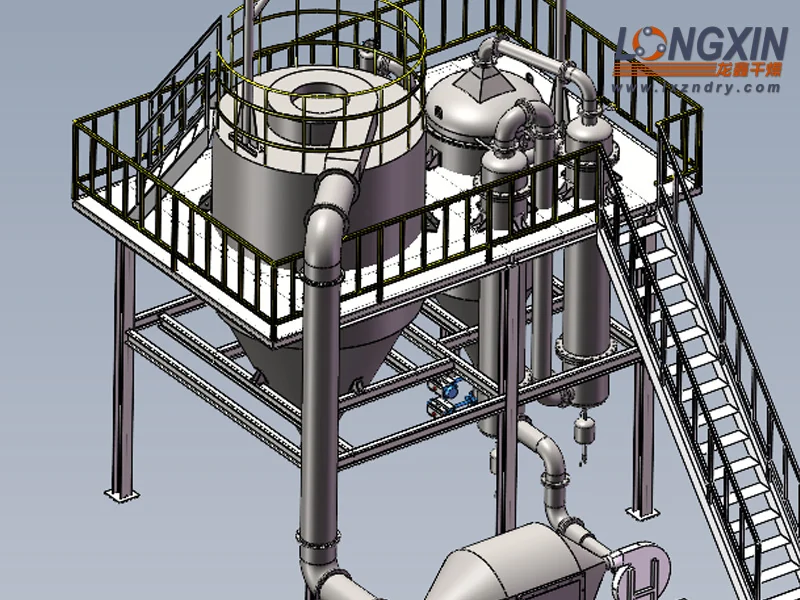
System Features
- Enclosed gas circuit: sealed vessels and pipe connections limit material loss and atmospheric ingress.
- Reduced oxygen exposure: inert-gas circulation and online oxygen monitoring support atmosphere control for oxidation-sensitive feeds.
- Solvent recovery: condensation and liquid separation recover the evaporated solvent for appropriate downstream handling or reuse.
- Powder collection: the cyclone and filter arrangement is selected to recover fine particles from the circulating gas.
- Cleaning access: clean-in-place equipment is included in the described configuration.
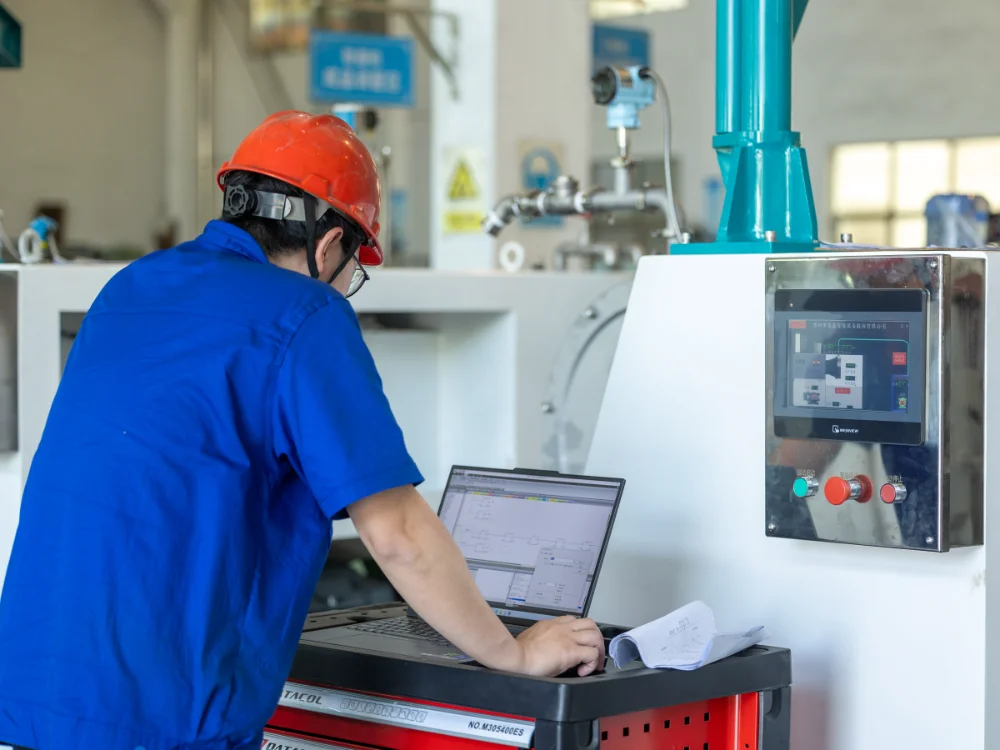
- PLC and touchscreen control: the interface displays the process flow and operating conditions. Process settings can be adjusted to influence particle size, bulk density and residual moisture or solvent.
The inert-gas system, pressure and oxygen controls, sealing arrangement and protective equipment are specified for the actual feed and solvent. These features support controlled processing; the required configuration depends on the application.
Process Configurations
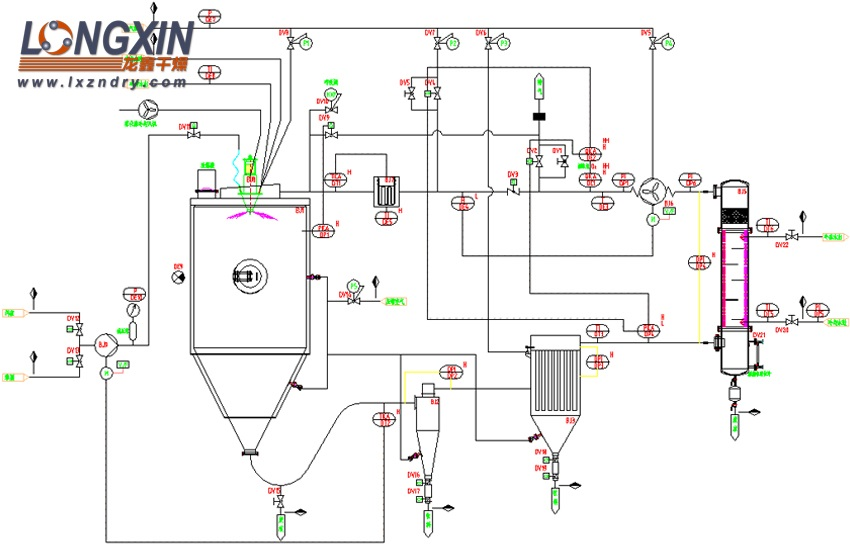
Standard Closed-Loop Arrangement
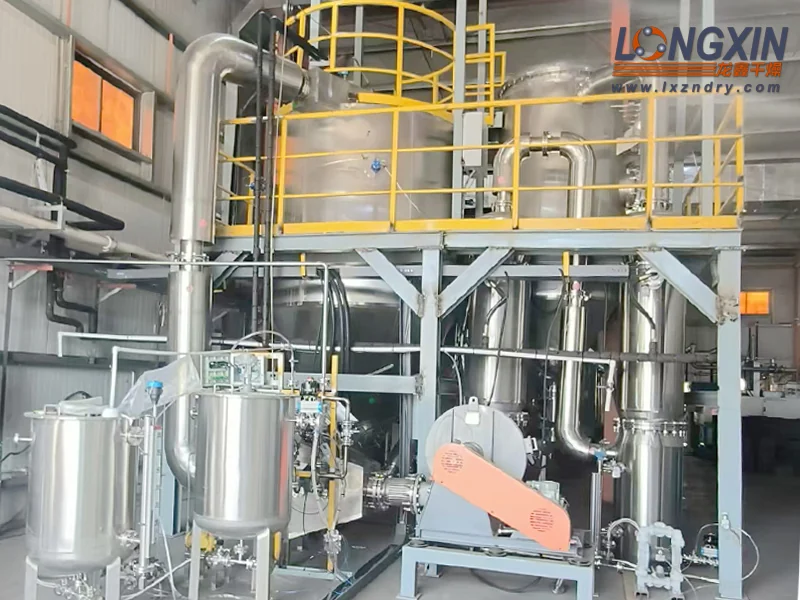
The standard circuit combines the spray dryer, powder collection, solvent condenser, gas–liquid separation, circulation fan and heater. It recovers solvent while returning the drying gas to the process.
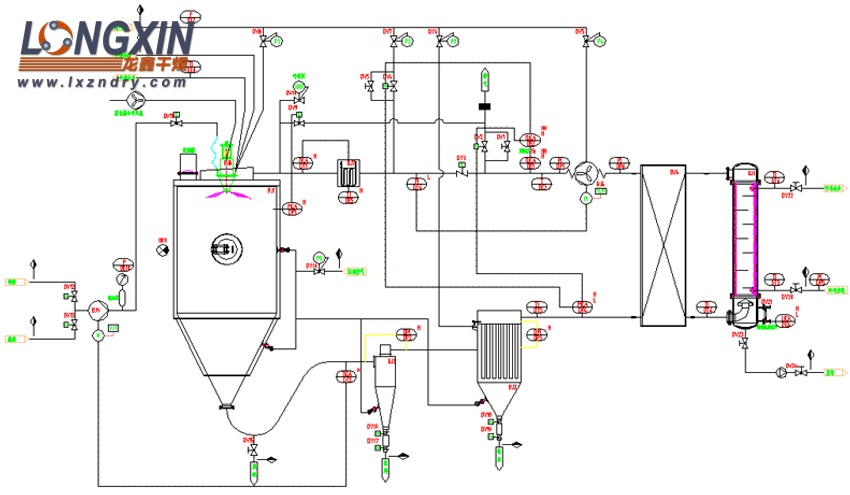
Arrangement with Heat Recovery
A heat recovery unit can be incorporated into the gas circuit to recover part of the available process heat. The arrangement is selected for the solvent system, operating temperatures and utility requirements.
Open-Cycle and Closed-Loop Spray Drying
An open-cycle dryer normally uses a once-through drying-gas stream. In the BLPG closed-loop arrangement, an inert gas circulates through drying, powder collection, solvent condensation and reheating stages. The enclosed loop therefore adds solvent recovery and atmosphere control to the spray-drying process.
The described BLPG system operates at a controlled positive pressure with nitrogen make-up. Operating pressure and gas composition are set for the selected installation. Recirculation reduces the need for fresh drying gas; utility consumption depends on both the heating and condensation duties.
Typical Applications
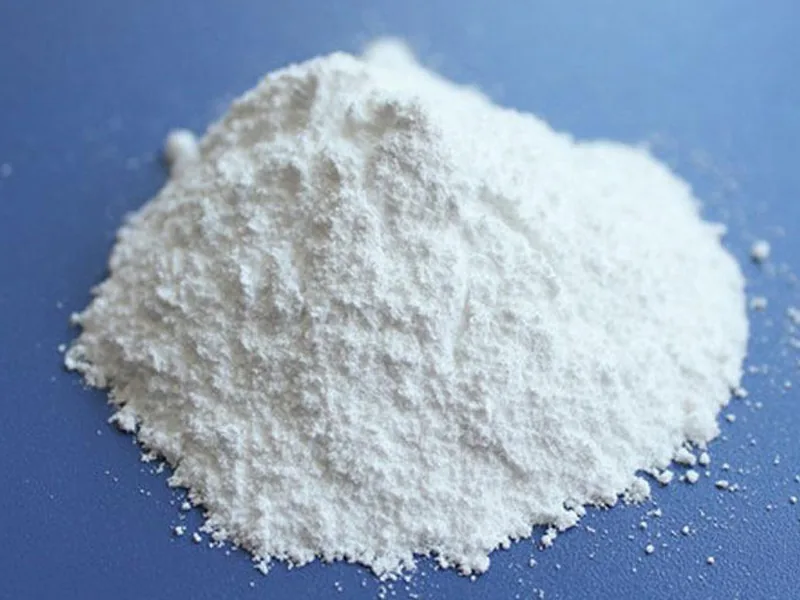
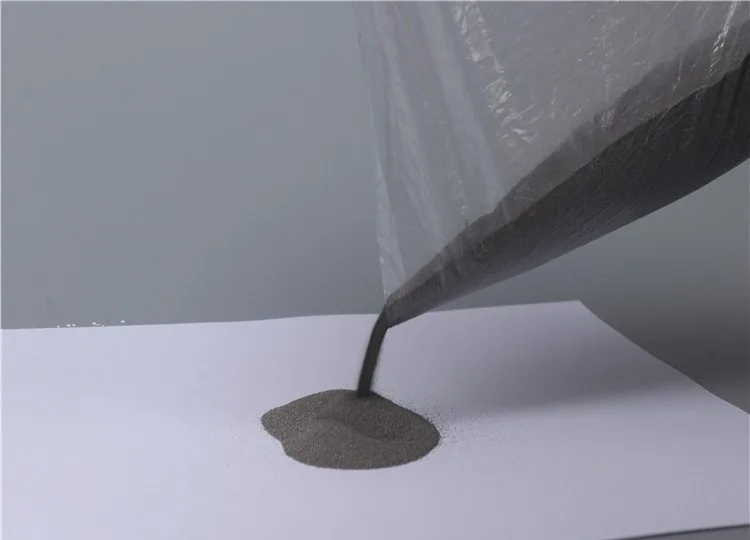
- Advanced ceramics: tungsten carbide, silicon nitride, silicon carbide and nanoceramic powders.
- Powder metallurgy and battery materials: suitable hardmetal and battery-material suspensions requiring a controlled drying atmosphere.
- Catalysts and fine chemicals: catalyst slurries, synthetic resins and other suitable organic-solvent-based feeds.
- Pharmaceutical and biological materials: solvent-containing formulations and extracts, with equipment and process conditions matched to the product requirements.
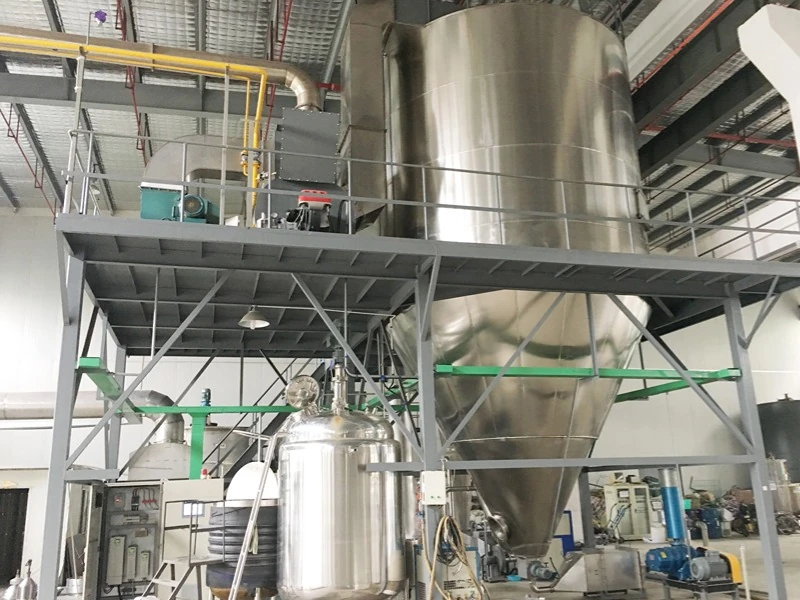
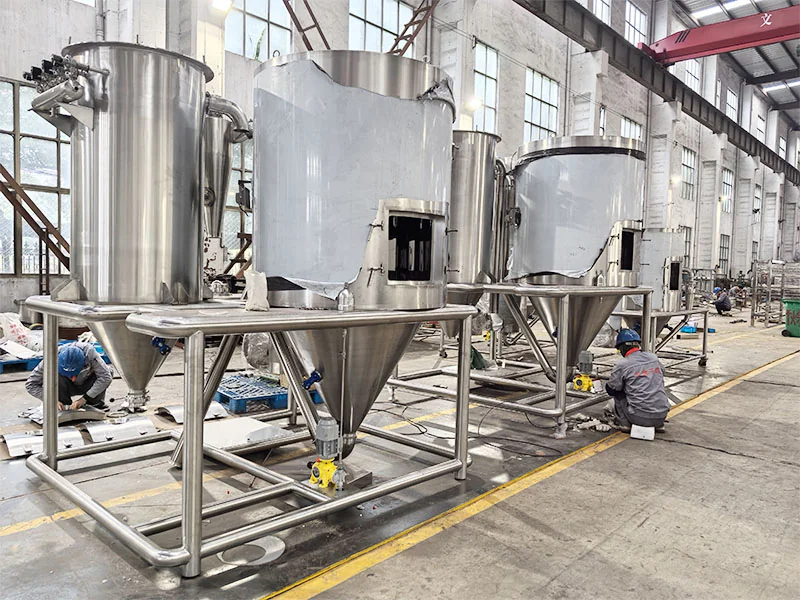
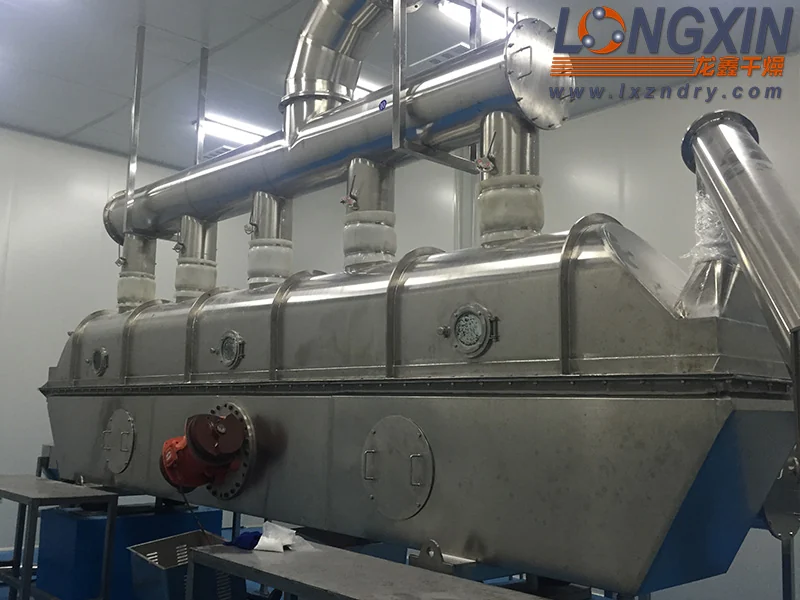
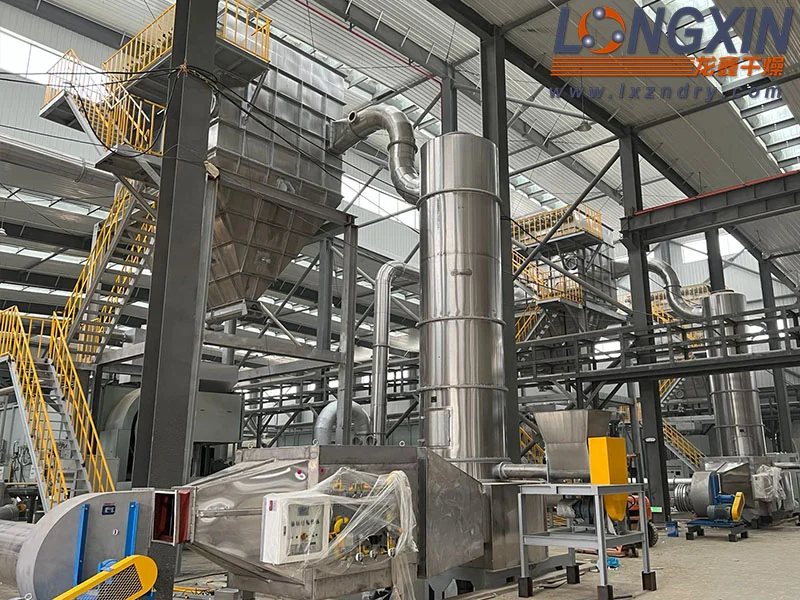
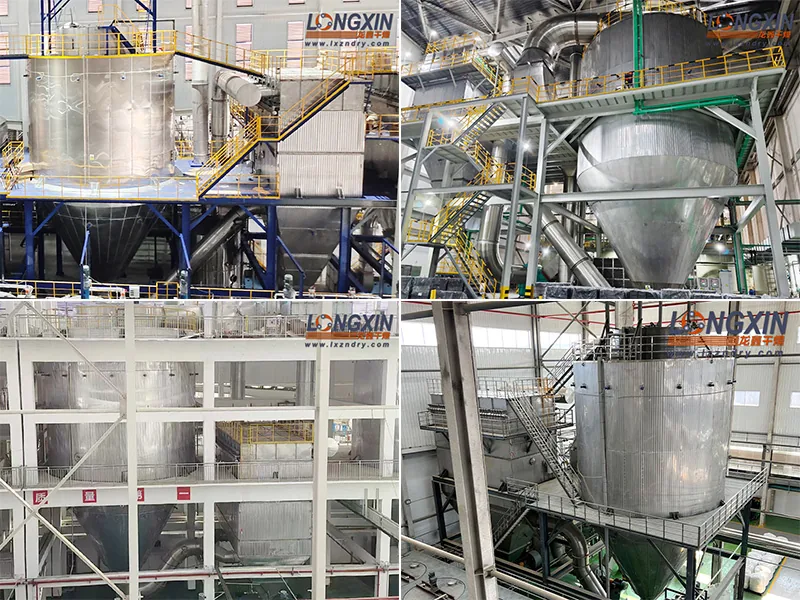
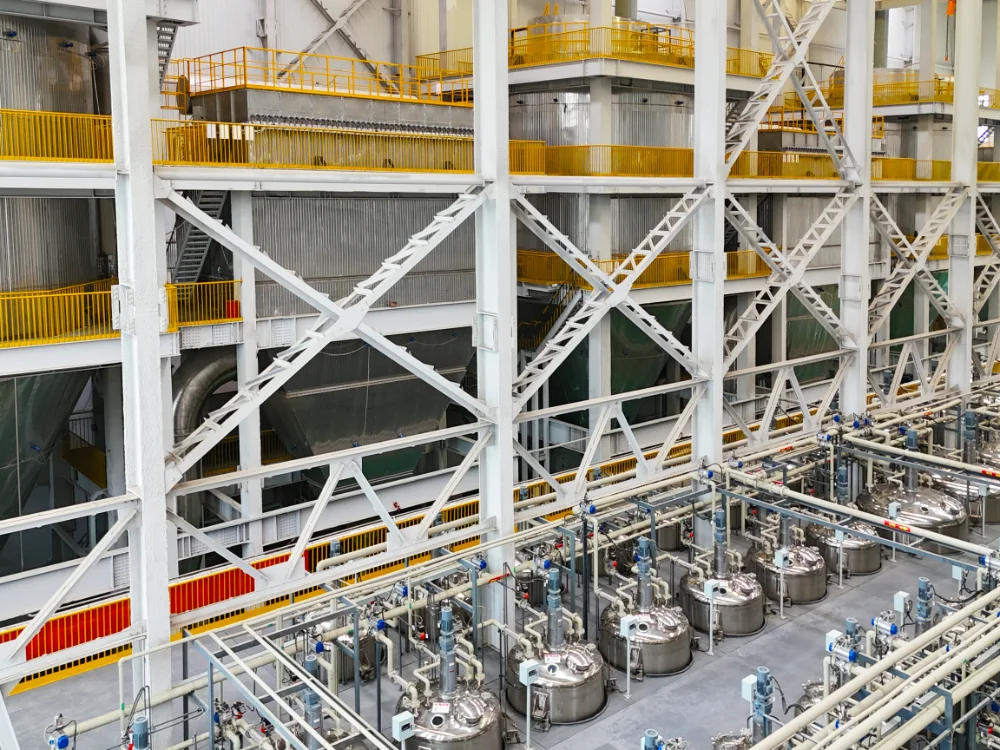
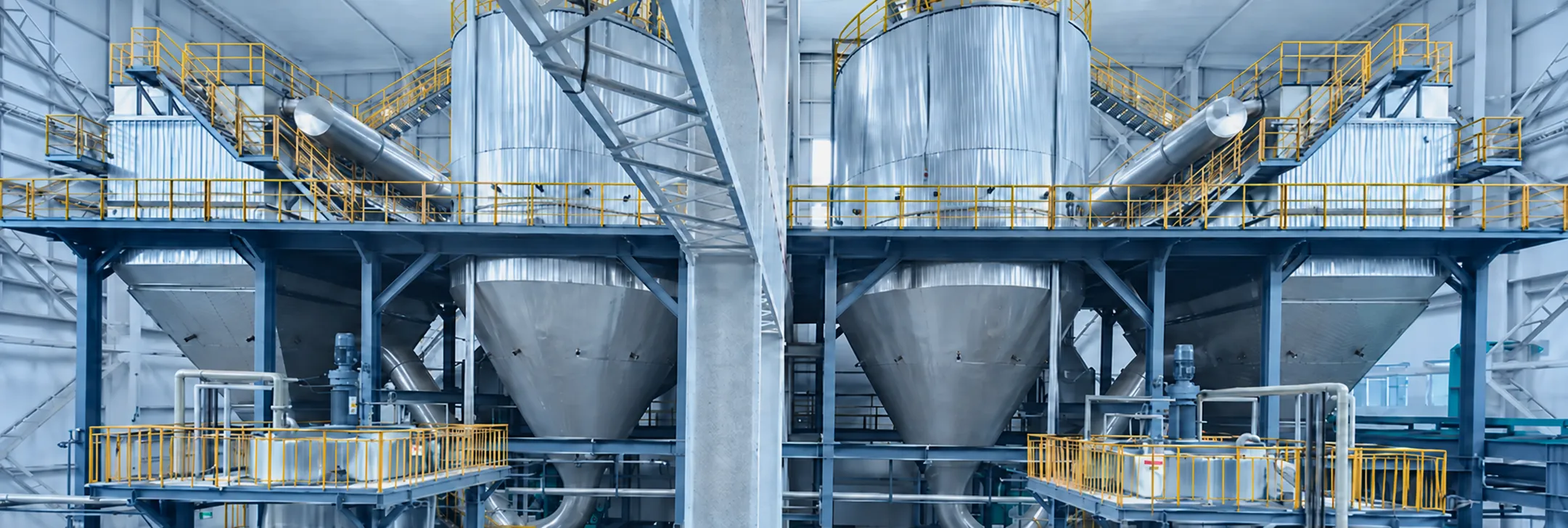
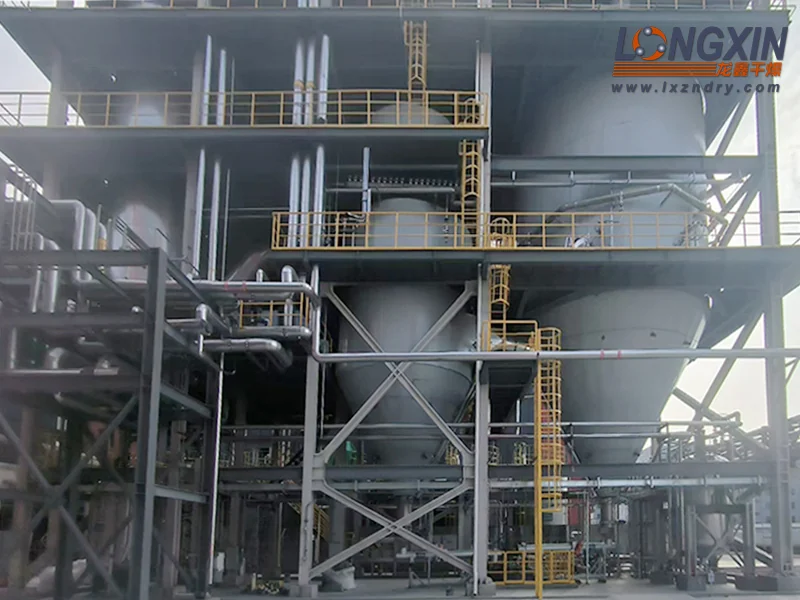
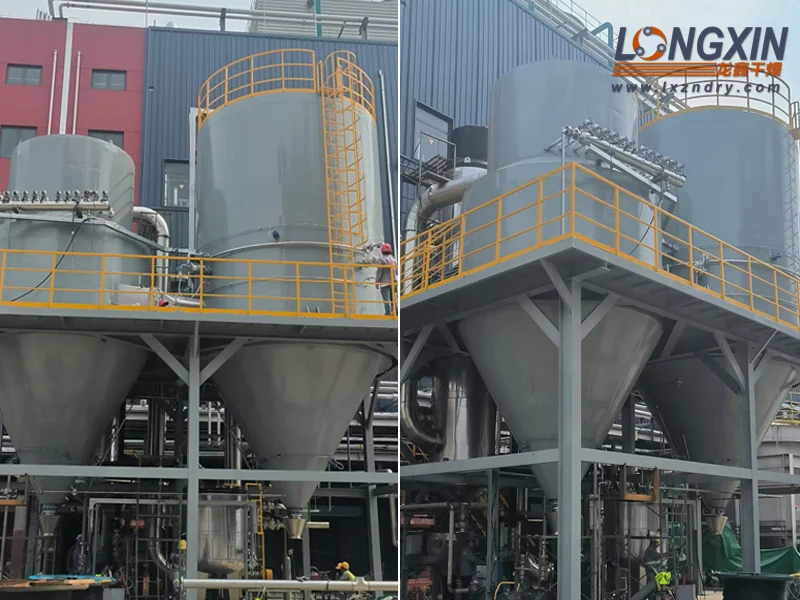
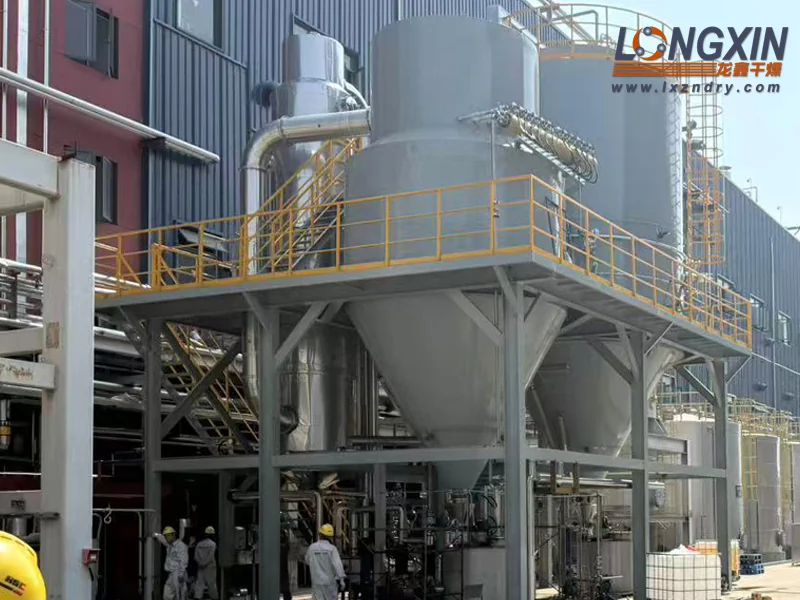
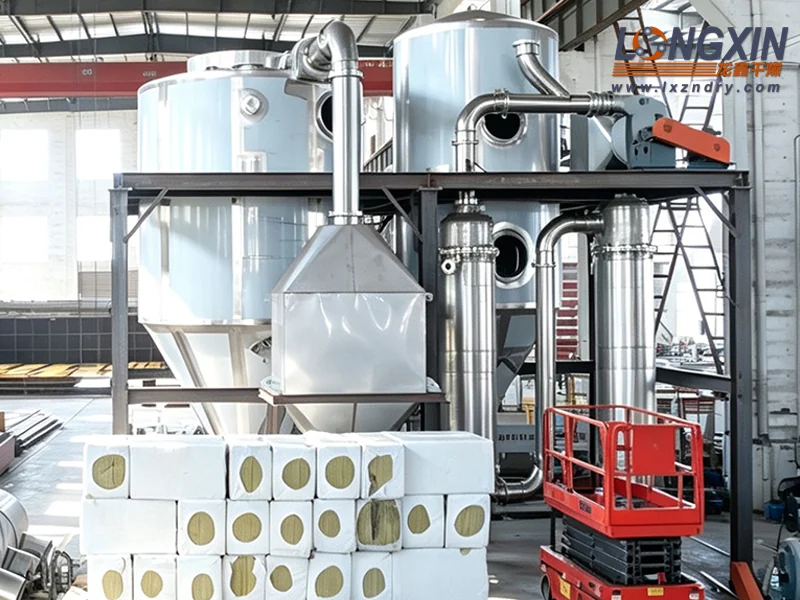
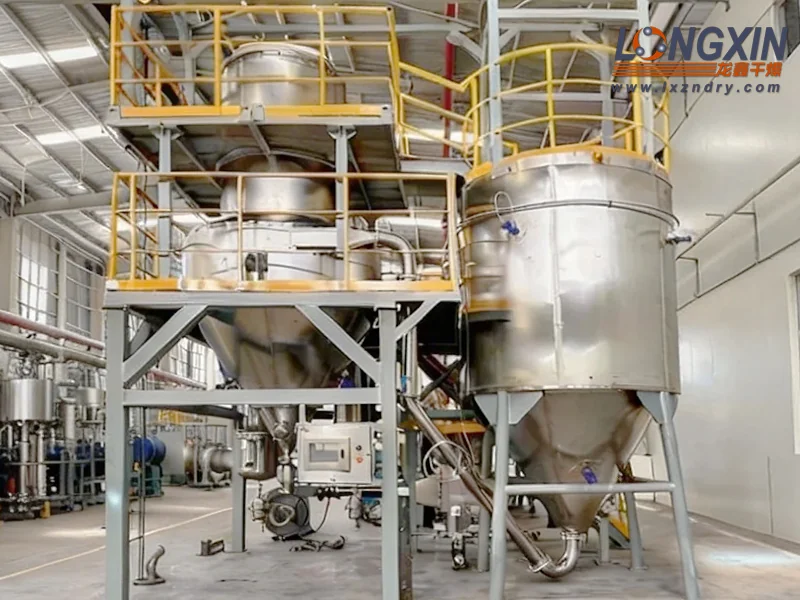
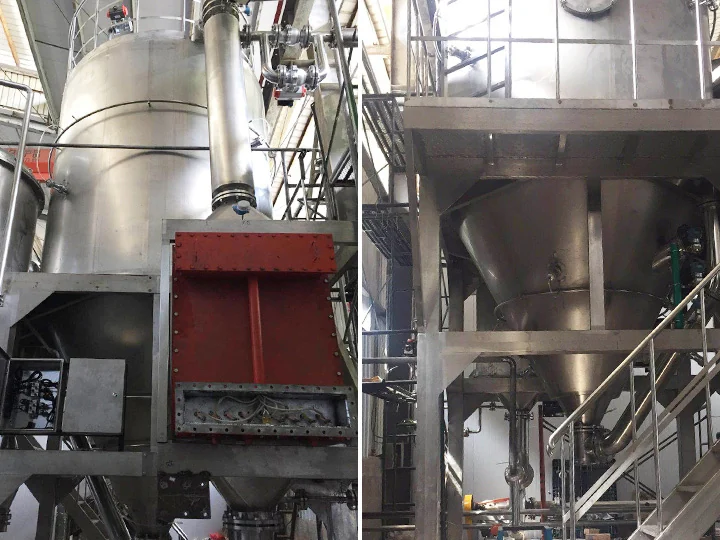
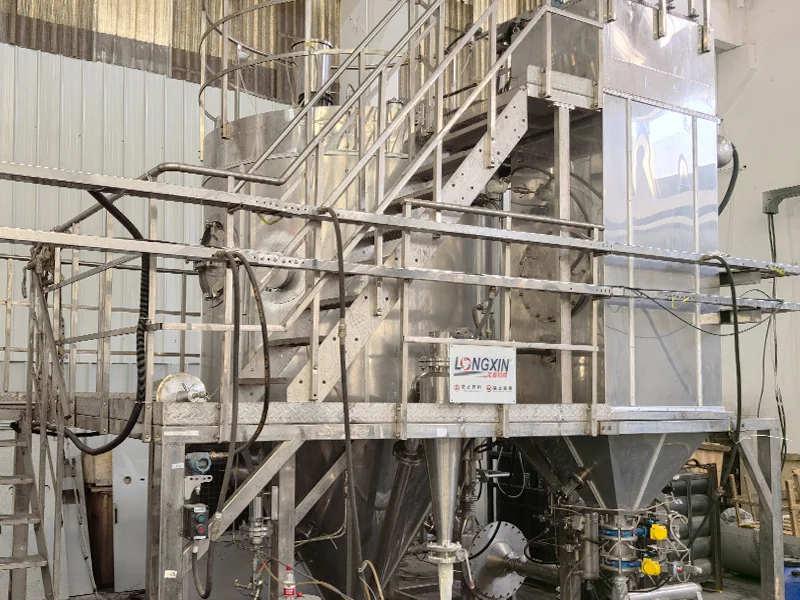
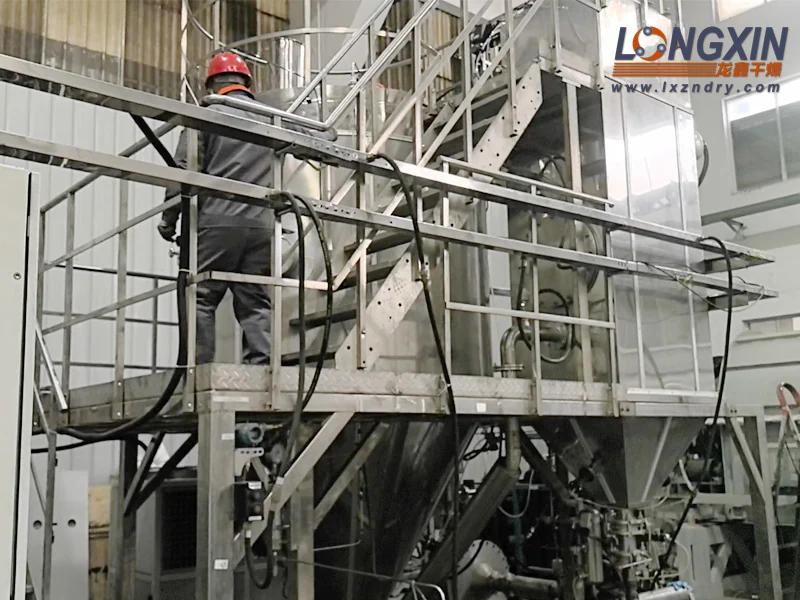
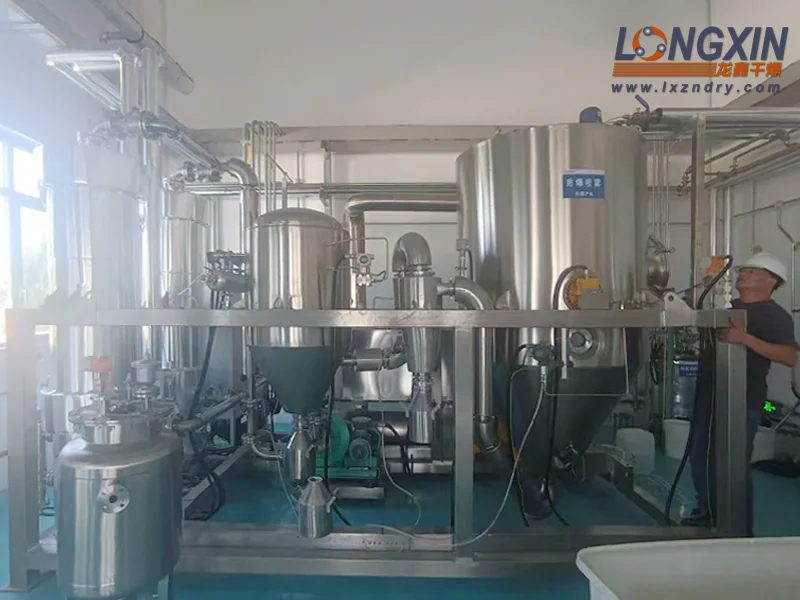
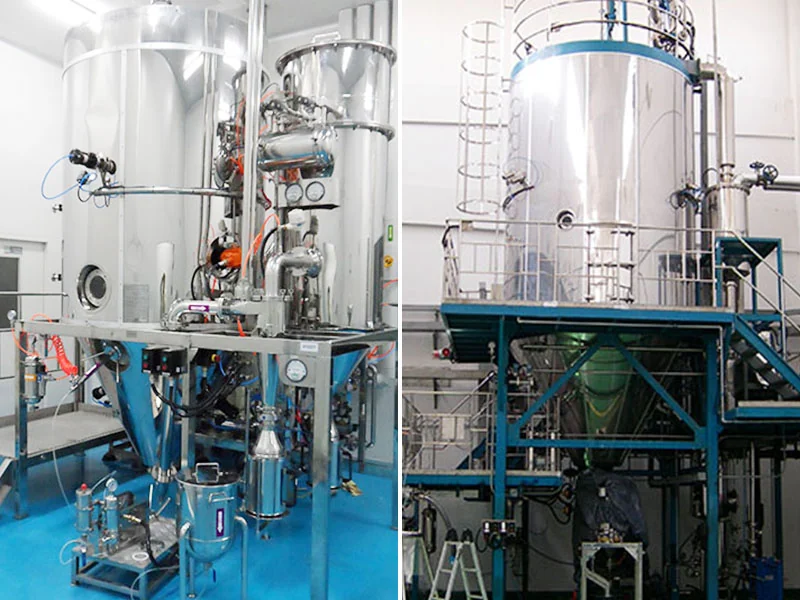
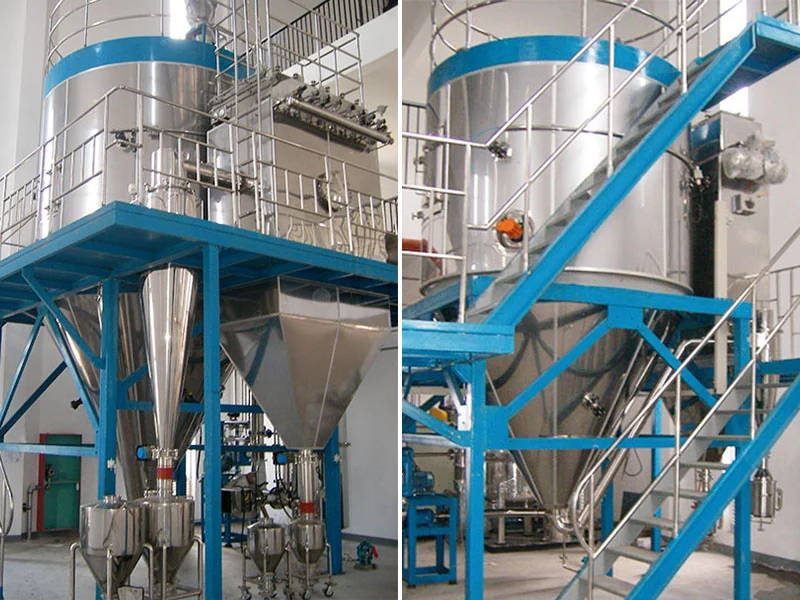
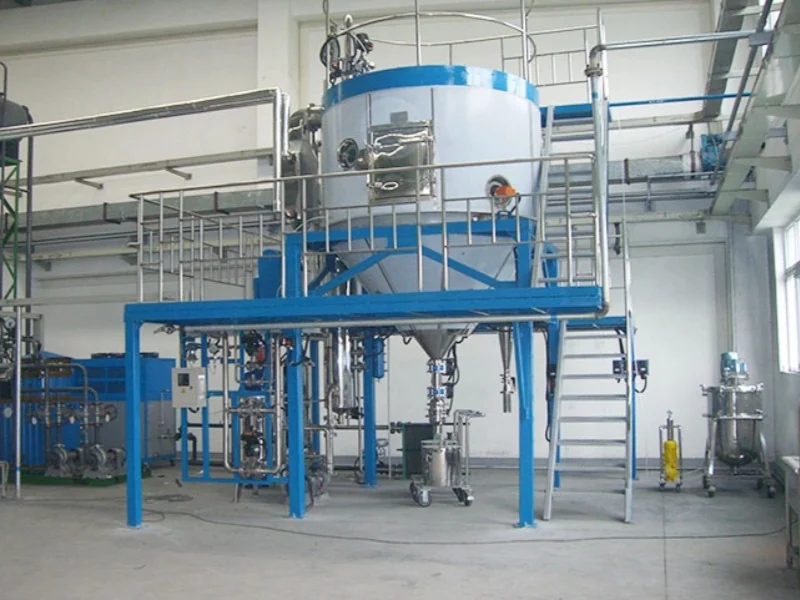
The illustrated installations include BLPG-1500, BLPG-500, BLPG-200, BLPG-150, BLPG-100, BLPG-50, BLPG-25 and BLPG-10 configurations, together with HC spray dryer installations and a catalyst-drying system. The Technical Specifications tab summarizes the supplied process references.
Define Your Solvent-Based Drying Application
For equipment selection, provide the feed composition and solvent system, solids content, viscosity, feed rate, required evaporation duty, target particle size, allowable residual solvent and temperature limits. Include the solvent recovery requirement, available nitrogen and utilities, cleaning requirements and installation space.