


Gas-assisted Atomization for Fine and Consistent Powders
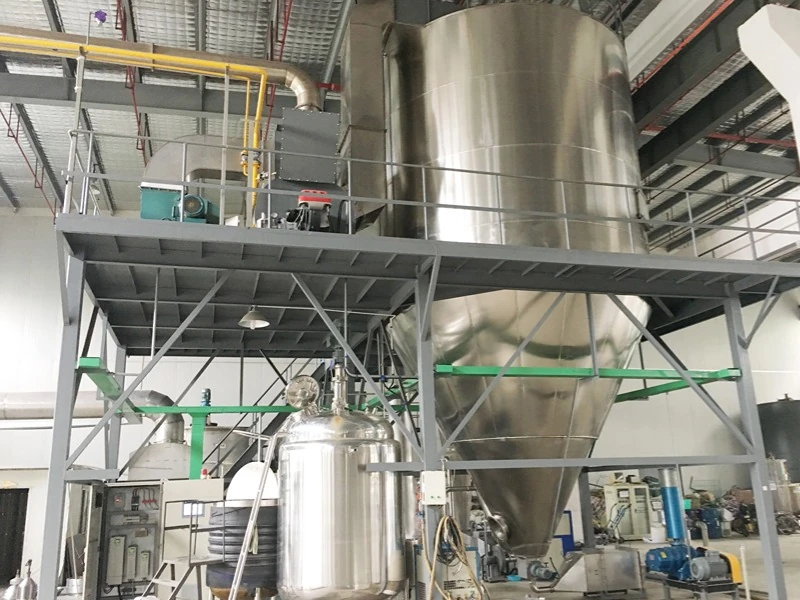
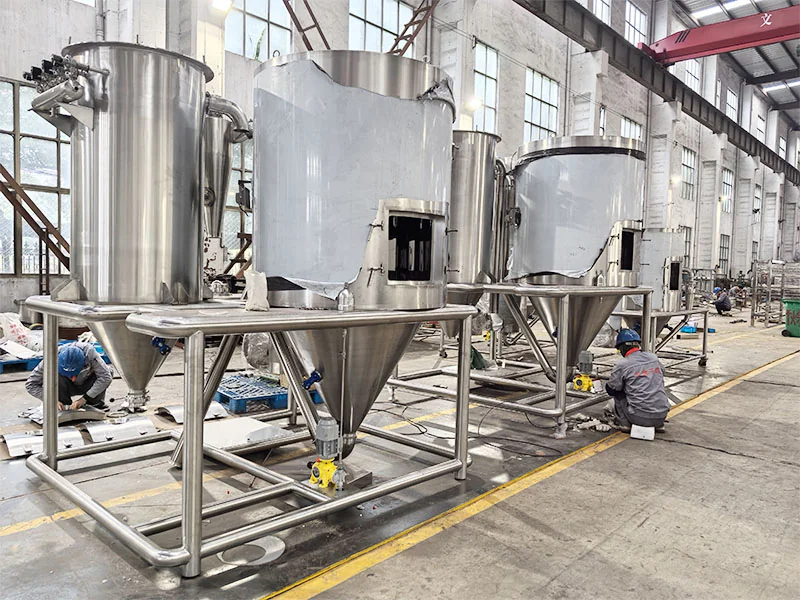
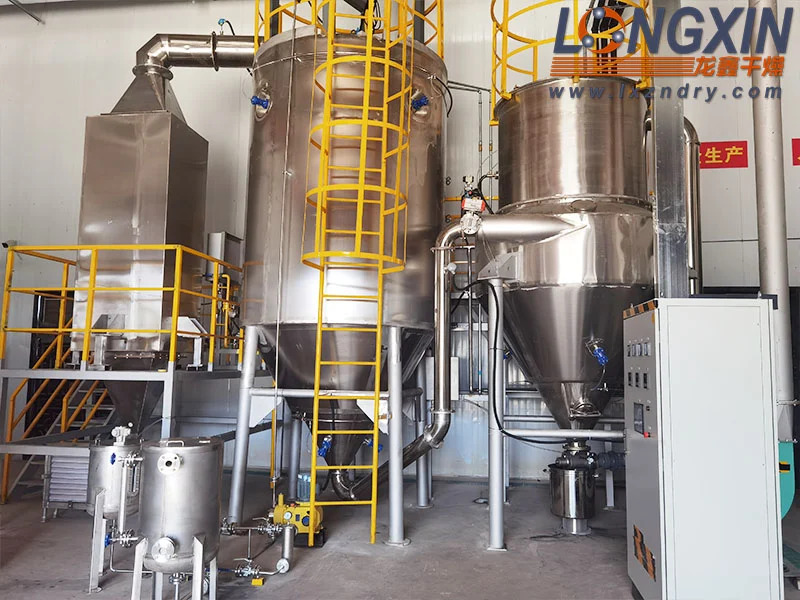
The QPG fluid nozzle spray dryer uses high-velocity compressed gas to atomize liquid feed into fine droplets. Atomization gas flow and feed rate can be adjusted to influence droplet size and the resulting powder characteristics.
A co-current arrangement is suitable for many heat-sensitive feeds because the droplets meet the hottest air while their surface moisture is evaporating. A mixed-flow arrangement can be selected for less heat-sensitive materials or applications requiring coarser particles.
Operating Principle
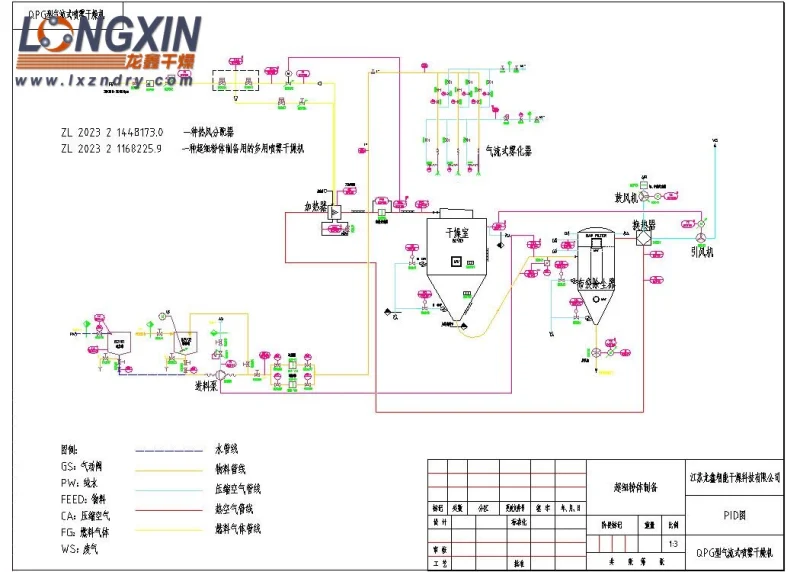
Liquid feed is delivered steadily to a two-fluid or three-fluid nozzle. Compressed air, another specified gas or superheated steam exits the atomizer at high velocity and creates shear at the liquid interface, breaking the feed into fine droplets. The droplets contact heated air in the drying chamber, moisture evaporates, and the dry powder is separated and collected.
Main System Sections
- Feed system: provides stable delivery of solution, emulsion, suspension or pumpable paste to the atomizer.
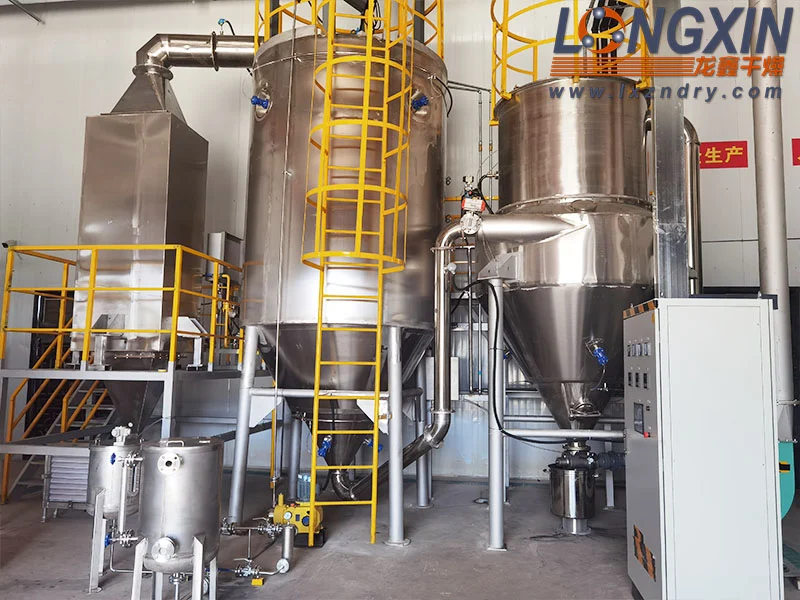
- Fluid nozzle atomizer: uses gas-assisted atomization; external-mix and internal-mix two-fluid nozzles or a three-fluid nozzle can be selected for the application.
- Drying chamber and air system: supplies controlled heated air and provides residence time for evaporation.
- Powder collection: separates and collects the dry product using the specified recovery arrangement.
- Controls: monitors the selected temperature, pressure, airflow and feed parameters.
Process Advantages
- Gas flow and feed rate provide a practical way to adjust atomization and particle formation.
- Suitable for feeds that are difficult to atomize with a conventional pressure nozzle, including selected higher-viscosity materials.
- Short drying residence time supports heat-sensitive products when process temperatures are correctly selected.
- The nozzle assembly is comparatively simple and can be configured for cleaning and maintenance access.
- Operating conditions can be tailored to target moisture, bulk density, flowability and dispersibility.
Typical Applications
Application areas include chemicals, food ingredients, pharmaceuticals, dairy products, environmental processing and ceramic or building materials. Representative feeds include silica, barium sulfate, detergents, resins, pigments, starches, proteins, coffee extracts, dairy powders, pharmaceutical intermediates and ceramic slurries. Suitability and achievable powder properties are confirmed through material evaluation or testing.
Information Required for Selection
- Feed composition, solids content, viscosity and solvent system.
- Required feed rate or evaporation duty.
- Target particle-size range, residual moisture and bulk density.
- Maximum allowable product temperature.
- Available atomizing gas, heating source and powder-recovery requirements.